
It wasn’t until I visited Silicon Valley during my master’s program that I seriously considered building my entrepreneurial future there.
For a moment, it seemed like the obvious next step.
Instead, I stayed in Gainesville.
For most of my career, I built businesses that worked, but none of them scaled beyond me.
They generated income.
They created independence.
They provided flexibility.
But they all shared the same structural limitation.
They depended on me.
If I stopped working, progress slowed.
If I stepped away, growth paused.
That’s not leverage.
That’s controlled independence.
Eventually I realized something important:
Entrepreneurship at scale is not an individual activity.
It’s an ecosystem activity.
You need operators.
You need partnerships.
You need infrastructure.
And most importantly, you need proximity to people building things.
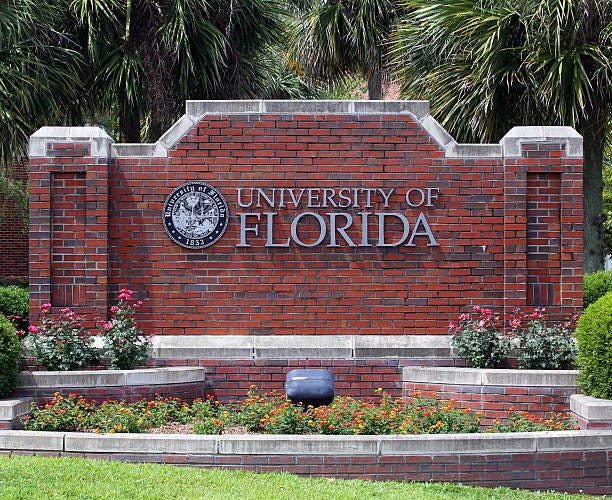
That realization is what led me to enroll online in the Thomas S. Johnson Master of Science in Entrepreneurship at the University of Florida.
Not for credentials.
For proximity.
The Solopreneur Problem
At the time, I was living in Brickell.
I had built several businesses, insurance, real estate, and other ventures that provided flexibility and financial stability.
But they all shared the same constraint.
They were built alone.
I was a solopreneur.
And while independence has advantages, I understood something fundamental:
If I ever wanted to build something truly entrepreneurial, something durable and scalable, I would need other people.
Collaboration.
Partnership.
A professional network.
I had always believed that success in business was not just about what you know, but who you know.
The problem was simple.
I had never seriously invested in building that network.
That realization is what pushed me toward the entrepreneurship master’s program.
Initially I attempted to complete the program remotely while continuing to live in Miami.
Halfway through the program I realized I was repeating the same mistake.
You cannot build relationships through a screen.
You cannot build trust remotely.
And you cannot build an entrepreneurial ecosystem from a distance.
If the goal was leverage, I needed proximity.
So I made a decision that felt uncomfortable at the time.
I relocated to Gainesville.
I moved looking for collaboration.
I moved looking for partnership.
I moved looking for people building things.
Most importantly, I moved to get uncomfortable.
The Gator Hatchery
A core component of the MSE program is the Gator Hatchery, the University of Florida’s startup incubator.
The Hatchery was not theoretical.
It was applied.
Student founders were building real companies, testing ideas, raising capital, and learning through execution.
The program operated in partnership with the University of Florida Warrington College of Business and worked closely with Starter Space, the Gainesville co-working and entrepreneurial community founded by Quang Tran and his wife Payal Khurana.
Starter Space became an important meeting point for the local startup ecosystem, a place where entrepreneurs, builders, and operators could work alongside one another and form the relationships that often lead to new ventures.
In the years since its founding, Starter Space has hosted a wide range of companies and organizations, including several Gator 100 recognized businesses such as Greek House and College Thread, as well as startups and organizations like Harness Giving, Inspire Placemaking Collective, Frich, Guestbox, Immersed Games, Roomsync, Greenpeace, and We Are Neutral.
That environment turned out to be pivotal.
The Hatchery created something powerful:
A place where builders, operators, and entrepreneurs were working on real ventures simultaneously.
And it’s where I met Quang Tran, whose work building entrepreneurial infrastructure in Gainesville through Starter Space had already made him a well-respected figure in the local startup community. Over time he would become one of the most important collaborators in my professional life.
Seeing Silicon Valley Up Close
As part of the entrepreneurship program, our cohort participated in a Silicon Valley immersion.
We stayed in Palo Alto and spent a week visiting companies and institutions that define the modern innovation ecosystem.
We saw the scale of hyperscale operators like NVIDIA, Google, and Apple, where the infrastructure, engineering depth, and long-term ambition become tangible in a way that is difficult to appreciate from the outside.
We also visited venture capital firms including Sequoia Capital, Sierra Ventures, and Innovation Endeavors, gaining insight into how early-stage companies are evaluated, funded, and scaled.
On the venture creation side, we met with emerging startups such as Range Energy and Primer, and spent time at StartX, Stanford University’s startup accelerator.
Seeing the Stanford ecosystem up close made a strong impression.
Not because of prestige.
But because of density.
Talent, capital, research institutions, and venture creation were all operating within the same gravitational field.
It made something very clear:
Ecosystems are not accidental.
They are built.
What struck me most about Silicon Valley wasn’t just the companies, it was the infrastructure behind them: universities, venture capital firms, accelerators, founders, and operators all reinforcing each other.
It made me realize something uncomfortable.
The most powerful entrepreneurial ecosystems in the world exist because people chose to build them deliberately.
They weren’t waiting for opportunity.
They were constructing it.
The trip reinforced something important:
The most powerful companies are rarely built in isolation. They emerge from ecosystems where talent, capital, and execution compound together.
Durable companies rarely emerge in isolation. They grow from ecosystems where builders, operators, universities, and institutions reinforce each other over time.
The Stanford Decision
After returning from Palo Alto, I decided to continue investing time in that environment.
I registered for an executive education program at the Stanford Graduate School of Business.
From a structural perspective, Silicon Valley represented the highest concentration of venture capital, technical talent, and scaling infrastructure in the world.
At that stage, continuing to build was never the question.
The only question was where to allocate the next decade of effort.
Silicon Valley appeared to be the logical answer.
The Question That Changed Everything
Before finalizing that decision, Quang asked a simple question that reframed the entire decision.
“What if we built here what you wished had existed when you arrived?”
It reframed the problem entirely.
Instead of leaving Gainesville to participate in someone else’s ecosystem, we could build one here.
Instead of plugging into existing infrastructure, we could create it.
That decision ultimately became the foundation for Compound Companies.
Instead of leaving Gainesville to plug into someone else’s ecosystem, we began building one. That effort eventually led to the creation of the Gator Accelerator, an operator-led program designed to help student founders move beyond ideas and actually launch companies.
Through that work we helped support ventures such as LensLink, WildBatch, AKIO AI, and GNVTech.
Over time it became clear that what we were really doing wasn’t running a program, we were building companies.
That realization ultimately led to the formal creation of Compound Companies as a platform for building and owning ventures long-term.
Building Compound
Compound Companies was not created as an accelerator or startup studio.
It was designed as something more durable.
A bootstrapped, operator-led ownership platform with an embedded venture studio engine.
The objective is not simply to launch startups.
The objective is to build and own businesses and assets capable of compounding value over long periods of time.
That work happens across several domains:
• Operating businesses and technology platforms
• Commercial real estate development and income-producing property
• Digital infrastructure and emerging asset classes including cryptocurrency and blockchain systems
The venture studio acts as the creation engine for new companies, while the broader Compound platform provides the ownership structure where businesses and assets mature over time.
We build first.
We strengthen second.
We evaluate outcomes third.
Brick by brick.
The Pattern I Eventually Recognized
Looking back, the path that led here followed a consistent pattern:
Insurance → flexibility
Real estate → leverage
Master’s program → relationships
Gainesville → ecosystem
Compound → scale
At the time it felt like zigzagging.
But it wasn’t.
I was reallocating time to acquire the resources I lacked.
Capital.
Relationships.
Infrastructure.
Looking back, I was unknowingly applying a principle I would later describe as Time-as-Capital, the idea that time, when invested deliberately, can eventually generate the other resources entrepreneurs need to build durable companies.
The Evolution Toward Asset Ownership
Another pattern eventually became clear.
The most durable entrepreneurial platforms rarely rely on a single type of asset.
They combine multiple forms of ownership.
Operating businesses generate cash flow.
Real estate provides stability and long-term appreciation.
Digital infrastructure introduces global scalability.
Compound Companies is being built with that same philosophy.
Not simply as a company builder, but as a platform capable of owning and developing businesses, physical assets, and digital systems that compound over time.
Why I’m Writing This
For most of my career, I avoided visibility.
But platforms require something different.
Compound Companies, Holstram, and Apex Consulting Solutions all depend on people.
Operators.
Builders.
Partners.
The shift from building businesses to building platforms requires collaboration.
This Substack isn’t a personal rebrand.
It’s infrastructure.
A place to document how we are building companies, ecosystems, and long-term ownership structures in Gainesville and beyond.
What Comes Next
Future posts will explore:
• How Holstram evolved into a sustainable hospitality real estate platform
• Building Compound Companies inside a university ecosystem
• Turning student talent into operating leverage
• Scaling Apex Consulting Solutions
• The development of platforms like MenuOS
These are the types of companies we believe compound over time.
Not through hype.
Through execution.
As Compound Companies continues to expand its portfolio of ventures and assets, we expect to selectively partner with operators, collaborators, and long-term aligned investors who share the vision of building durable companies outside traditional venture ecosystems.
Compound Companies is not a startup.
It is a platform for building and owning businesses, assets, and infrastructure designed to compound and endure over time.
Brick by brick.